Introduction
Neoadjuvant chemotherapy (NAC) has been successfully integrated into the management of several gastrointestinal malignancies1,2; however, its role in colon cancer has historically remained limited. The standard treatment paradigm for colon cancer has traditionally consisted of upfront surgical resection followed, when indicated, by adjuvant chemotherapy.3 Emerging data have challenged this conventional approach, suggesting that selected patients with locally advanced colon cancer (LACC) may derive meaningful benefits from systemic therapy administered prior to surgery.4–6 Potential advantages of neoadjuvant therapy include early eradication of micrometastatic disease, radiologic and pathologic downstaging, improved quality of surgery, avoidance of delays in systemic therapy and improved treatment adherence. In addition, neoadjuvant therapy allows time for prehabilitation before surgery and may improve antitumor immune response, while the primary tumor and its microenvironment remain intact and tumor antigen heterogeneity may be relatively limited.
Despite the potential benefits of neoadjuvant therapy, important concerns remain. These include the risk of tumor progression during neoadjuvant treatment, precluding curative surgery, while complications such as bowel obstruction or bleeding may necessitate emergency surgery.7 Furthermore, computed tomography (CT)-based local staging remains imperfect and may overstage disease, which may result in overtreatment of low-risk patients. Consequently, adoption of neoadjuvant therapy in colon cancer has been cautious and has required additional clinical evidence before challenging established practice.
Over the past decade, several clinical trials have expanded the evidence base. Prospective randomized studies have demonstrated feasibility and clinical activity of NAC,8–11 while advances in immunotherapy have yielded unprecedented responses in patients with early-stage high microsatellite instability (MSI-H)/deficient mismatch repair (dMMR) disease.12,13 This review summarizes the current evidence supporting NAC and immunotherapy, focusing on major clinical trials and emerging translational findings that might potentially change the management of LACC.
Neoadjuvant chemotherapy in locally advanced colon cancer
The FOxTROT,8 OPTICAL,9 NeoCol10 and PRODIGE 2211 trials provide the strongest evidence supporting NAC in colon cancer (Table 1). These studies assessed the safety, pathological activity and clinical outcomes of preoperative systemic chemotherapy in patients with radiologically staged LACC.
FOxTROT
FOxTROT (NCT00647530) was the first phase III randomized trial to evaluate NAC in patients with LACC.8 The study enrolled 1,053 patients with stage cT4 or cT3 tumors exhibiting at least 1 mm of extramural invasion, who were randomly assigned in a 2:1 ratio to receive either NAC followed by surgery and postoperative chemotherapy or immediate surgery followed by standard adjuvant chemotherapy. Patients in the neoadjuvant arm received three cycles of 5-fluorouracil, leucovorin and oxaliplatin (FOLFOX) or two cycles of capecitabine and oxaliplatin (CAPOX) before surgery. After resection, patients completed an abbreviated adjuvant treatment course consisting of nine additional cycles of FOLFOX (or three cycles in the shorter schedule) or six cycles of CAPOX (or two cycles in the shorter schedule). Patients in the control group proceeded directly to surgery and subsequently received the full conventional adjuvant regimen, consisting of either 12 or six cycles of FOLFOX, or eight or four cycles of CAPOX, according to the selected schedule. The primary endpoint was residual or recurrent disease at two years. Secondary endpoints included pathological response, downstaging, treatment feasibility and survival outcomes.
The study demonstrated a statistically significant reduction in residual or recurrent disease at two years, with rates of 16.9% in the neoadjuvant arm compared with 21.5% in the control arm (p=0.037) (Table 1), with no safety concerns.8 Although there was no difference in colon cancer-specific mortality between arms (p=0.095), NAC resulted in measurable tumor response, histopathologic downstaging and higher rates of complete (R0) resection.
A pathological complete response (pCR) was achieved in 3.7% of patients in the NAC arm, and patients with the highest-risk tumors benefited the most from NAC.8 Three-year disease-free survival (DFS) rate also favored NAC at 80.7% compared with 75.8% following upfront surgery (HR: 0.73 [95% CI: 0.55–0.97]; p=0.030). Importantly, a strong correlation was observed between the Dworak tumor regression score and recurrence risk: patients achieving pCR experienced no recurrences within five years, whereas those without tumor regression had a five-year recurrence risk of 29%. Treatment completion prior to surgery reached 90%, demonstrating that the neoadjuvant approach was feasible and well tolerated.
In FOxTROT, patients with RAS wild-type tumors were further randomized in a 1:1 ratio to receive panitumumab, an anti-EGFR antibody, in addition to NAC.8 Among 279 evaluable patients, adding panitumumab did not improve overall efficacy at a median follow-up of 3.1 years. However, exploratory biomarker analysis suggested that treatment benefit may vary across molecular subgroups.14 Results showed that HER2 positivity was associated with inferior DFS versus HER2 negativity in the FOLFOX-alone arm (HR: 1.53 [95% CI: 1.02–2.31]; p=0.04). Exploratory subgroup analyses suggested longer DFS with panitumumab plus FOLFOX than with FOLFOX alone in both HER2-high (n=44 vs n=32) and HER2-low (n=41 vs n=37) tumors, although neither comparison reached statistical significance (Table 2). Given the limited sample size and exploratory nature of the analysis, these findings should be interpreted with caution.
In contrast, high ERBB3 (HER3) expression emerged as a potential predictive biomarker for EGFR inhibition (Table 2).14 In patients with HER3-high tumors, panitumumab plus neoadjuvant FOLFOX significantly improved both DFS (median, 51.2 months vs 40.3 months; HR: 0.37 [95% CI: 0.14–0.97]; p=0.04) and OS (median, 57.6 months vs 46.2 months; HR: 0.16 [95% CI: 0.04–0.75]; p=0.02). No DFS or OS benefit was observed in HER3-low tumors.
OPTICAL
The phase III OPTICAL trial (NCT02572141) evaluated neoadjuvant FOLFOX or CAPOX in 738 patients with cT4 or cT3 tumors demonstrating at least 5 mm of extramural invasion.9 The study compared NAC followed by stage-adapted postoperative chemotherapy versus upfront surgery with postoperative chemotherapy alone. The trial did not meet its primary endpoint of DFS, although a numerical improvement was observed with NAC (3-year DFS rate, 82.1% vs 77.5%; HR: 0.74 [95% CI: 0.54–1.03]; p=0.07) (Table 1). Similar to FOxTROT, neoadjuvant treatment significantly reduced pathological tumor stage (pT3–4, 77% vs 94%) and lymph node involvement (pN1–2, 31% vs 46%) compared with upfront surgery. The pCR in the preoperative arm was 7.4%, exceeding that reported in FOxTROT.
Despite the nonsignificant DFS result, preoperative therapy significantly improved 3-year overall survival (OS) rates (95.1% vs 89.6%; HR: 0.44 [95% CI: 0.25–0.77]; p=0.012).9 However, the significant improvement in OS despite the lack of a statistically significant DFS benefit should be interpreted with caution. This discrepancy may be related to the relatively small number of survival events or other study-specific factors.
Overall, OPTICAL supports the consistent benefit of NAC in improving pathological response and tumor downstaging, particularly in pMMR tumors (3-year DFS rate, 80.4% with NAC vs 75.5% with upfront surgery; HR: 0.68 [95% CI: 0.47–0.99]).9 In contrast, the survival results are less consistent and require confirmation in longer-term follow-up and future studies. Notably, approximately 62% of patients completed all planned cycles of preoperative chemotherapy, reflecting slightly reduced tolerability compared with FOxTROT but still demonstrating overall feasibility.
NeoCol
NeoCol (NCT01918527), a smaller phase III trial including 250 patients, evaluated four cycles of FOLFOX or three cycles of CAPOX prior to surgery in patients with cT3 tumors with more than 5 mm extramural invasion or cT4 disease.10,15 Although no significant difference in 2-year DFS was observed between the treatment arms (p=0.94) (Table 1), the study confirmed low complication rates and supported the general feasibility of administering chemotherapy before tumor resection.10 Updated results at three years showed a DFS rate of 87% in the upfront surgery arm and 83% in the neoadjuvant arm (p=0.36).15
PRODIGE 22
PRODIGE 22 (NCT01675999) was a phase II trial that enrolled 120 patients with cT3, cT4 or cN2 disease.11 Patients received four cycles of neoadjuvant FOLFOX followed by surgery and eight postoperative cycles, compared with the control group receiving 12 cycles postoperatively. A third arm was added for patients with RAS wild-type tumors (n=16), evaluating perioperative FOLFOX plus cetuximab; however, this arm was discontinued early after an interim analysis showed no improvement in pathological tumor regression or long-term oncological outcomes.
Results showed that perioperative chemotherapy did not improve the major pathological response rate, with a tumor regression grade 1 (TRG1) observed in 8.2% of patients receiving NAC (Table 1).11 However, perioperative chemotherapy was associated with a significant pathological regression (TRG1-2, 44% vs 8%, p<0.001) and a trend toward tumor downstaging compared with the control arm. The trial also demonstrated high chemotherapy completion rates of 96% during the neoadjuvant period.
Meta-analysis of four NAC trials
A comprehensive meta-analysis that synthesized data from 1,248 patients in the FOxTROT, OPTICAL, NeoCol and PRODIGE 22 populations demonstrated a 21% relative reduction in the risk of disease recurrence and a 38% reduction in mortality among patients treated with NAC.16 Additionally, NAC increased R0 resection rates, with an increase of 80% in the odds compared with upfront surgery. Major pathologic response and pCR were achieved in 36.2% and 5.9% of patients, respectively. These outcomes provide strong evidence of the potential clinical benefits of neoadjuvant treatment.
Which patients with colon cancer benefit most from neoadjuvant chemotherapy? The role of mismatch repair status
MMR status has emerged as one of the most important determinants of sensitivity to cytotoxic chemotherapy in colon cancer. Tumors with dMMR exhibit defective DNA error repair, high levels of microsatellite instability, pronounced lymphocytic infiltration and distinct patterns of chemosensitivity. Data indicate that these tumors respond poorly to adjuvant fluoropyrimidine-based chemotherapy. In contrast, tumors with proficient MMR (pMMR) generally retain greater susceptibility to standard chemotherapy and are therefore the subgroup most likely to benefit from NAC.
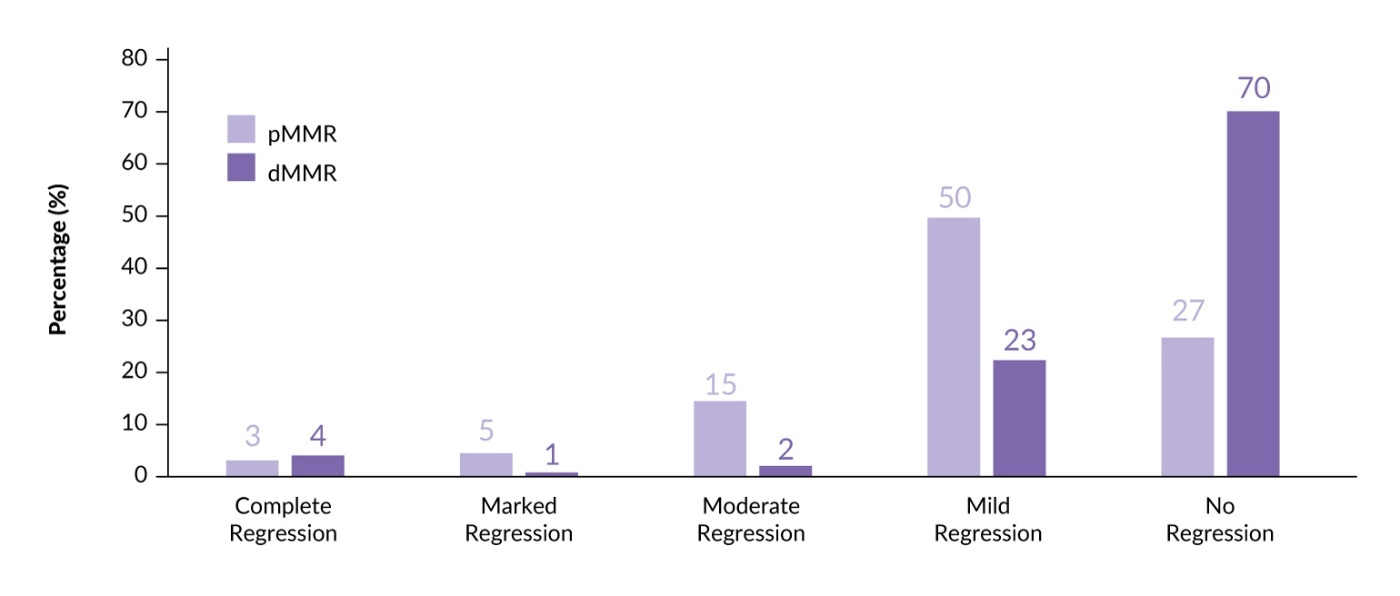
In the FOxTROT study, MMR status was available for approximately 87% of patients, with 20.2% having dMMR and the remainder showing pMMR or unknown status.8 Pathological assessment demonstrated a marked difference in tumor regression between groups: moderate or greater regression occurred in 23% of pMMR tumors compared with only 7% of dMMR tumors (Figure 1), and pathological response strongly correlated with recurrence risk.
In the OPTICAL trial population, MMR status was determined in 87% of patients, of whom 11.6% had dMMR.9 Consistent with the FOxTROT findings, patients with dMMR tumors did not experience significant benefits from NAC, with TRG0–1 after NAC observed in only 5% of patients compared with 21% in the pMMR subgroup.
Taken together, these analyses confirmed that the benefits of NAC are largely confined to patients with pMMR tumors, particularly in the presence of high-risk radiologic features. They also underscore the need to consider alternative neoadjuvant approaches, most notably immunotherapy, for patients with MSI-H/dMMR disease.
_status_in_the_foxtrot_study.jpeg)
Neoadjuvant immunotherapy in colon cancer
The high sensitivity of MSI-H/dMMR colorectal cancer to immune checkpoint inhibitors (ICIs) in the metastatic setting has been demonstrated in several clinical trials. In the phase III KEYNOTE-177 study (NCT02563002), pembrolizumab significantly prolonged progression-free survival (PFS) compared with standard chemotherapy in previously untreated patients with MSI-H/dMMR metastatic colorectal cancer, with favorable safety profile and durable responses.17 Similarly, the phase II CheckMate 142 study (NCT02060188) demonstrated clinically meaningful and durable activity of nivolumab, both as monotherapy and in combination with low-dose ipilimumab, in patients with previously treated MSI-H/dMMR metastatic colorectal cancer.18,19 More recently, nivolumab plus ipilimumab has also shown promising efficacy as first-line therapy in MSI-H/dMMR metastatic colorectal cancer versus chemotherapy in the phase III CheckMate 8HW trial (NCT04008030), further consolidating ICIs as a key component of systemic treatment in this setting.20 These findings have prompted the investigation of neoadjuvant immunotherapy in localized disease.
NICHE-2
NICHE-2 (NCT03026140), a multicenter phase II study, evaluated neoadjuvant nivolumab plus ipilimumab in patients with non-metastatic, radiologically staged dMMR colon cancer, including high-risk features such as T4 and N2 disease (48% of patients had both).12 The primary endpoints were safety (timely surgery) and 3-year DFS. The secondary endpoints included pathological response and results of translational genomic analyses.
The regimen demonstrated excellent feasibility, with 98% of patients proceeding to surgery as scheduled.12 In the safety population (n=115), immune-related grade 3–4 adverse events (AEs) occurred in only 4% of patients and none of the patients discontinued treatment due to AEs. Among the 111 patients included in the efficacy analysis, 95% (n=105) achieved a major pathological response, while 68% of patients (n=75) achieved pCR. Importantly, ctDNA assessed three weeks after surgery was undetectable in all evaluated patients, which might suggest effective systemic disease clearance. With a median follow-up of approximately 36.5 months, 3-year DFS was 100% in the efficacy population, indicating durable benefit of the regimen.21
Although pCR rates in the primary tumor are striking after neoadjuvant immunotherapy, the relationship between primary tumor regression and eradication of metastatic disease in regional lymph nodes remains unclear.12 While surgery allows pathological assessment of both the primary tumor and lymph nodes, the concordance between these responses has not been fully established. This question is particularly important as organ preservation and other treatment de-escalation strategies are being explored, because residual nodal disease could remain clinically relevant despite an excellent response at the primary tumor site.
IMHOTEP
The IMHOTEP trial (NCT04795661) assessed pembrolizumab as neoadjuvant therapy in MSI-H/dMMR cancers across multiple gastrointestinal sites.13 The colorectal cancer cohort included 63 colon tumors and nine rectal tumors. The pCR rate was 52.8% across the entire population. After one cycle of pembrolizumab, 46.0% of patients with colon cancer achieved pCR, and after two cycles, the pCR rate increased to 68.2%. Among patients with rectal cancer, pCR was observed in 33.3%. These findings confirm that even short courses of single-agent programmed death-1 (PD-1) blockade induce pronounced tumor regression in localized MSI-H colon cancer.
As neoadjuvant immunotherapy is increasingly incorporated into clinical practice, additional real-world surgical data will be important. Current studies suggest that planned colectomy remains feasible after neoadjuvant immune checkpoint blockade, although treatment-related fibrosis or inflammatory changes may increase surgical complexity.12,13,21 Larger real-world studies will help better define perioperative morbidity, surgical difficulty and postoperative outcomes.
Novel neoadjuvant immunotherapy combinations
Several recent phase II studies have consistently demonstrated high response rates with emerging ICI-based neoadjuvant regimens in patients with MSI-H/dMMR colon and colorectal cancer. For example, the NICHE-3 trial (NCT03026140), which evaluated the combination of nivolumab and relatlimab, reported major pathological responses similar to those of NICHE-2, with a pCR rate of 68%.22 The phase Ib study (NCT05890742) using sintilimab with or without the CTLA-4 inhibitor IBI310 demonstrated pCR rates of 80.0% with combination therapy and 47.7% with sintilimab monotherapy (p=0.0007),23 with the full report now confirming the superiority of the combination therapy.24 In the PICC study, the PD-1 inhibitor toripalimab demonstrated 5-year OS rates of 100% in combination with the cyclooxygenase-2 inhibitor celecoxib, as compared with 94% with toripalimab alone,25 while the NEOPRISM study on pembrolizumab reported a pCR rate of 58% in the evaluable population.26
The early-phase NEST program (NCT05571293) evaluated neoadjuvant botensilimab, an Fc-enhanced CTLA-4 inhibitor, combined with balstilimab, a PD-1 inhibitor, in patients with resectable colorectal cancer, including pMMR/microsatellite-stable (MSS) and MSI-H/dMMR tumors.27 In NEST-1, one out of seven patients with pMMR tumors achieved pCR and four had at least 50% tumor regression. In NEST-2, intensified balstilimab exposure demonstrated higher activity in 15 patients with MSS tumors, with 40% achieving pCR and 60% showing at least 50% tumor regression. The small MSI-H cohort, which included three patients from the NEST-1 population and one from the NEST-2 population, exhibited uniformly deep responses, with a 75% pCR rate and 100% of patients achieving at least 50% tumor regression. Early follow-up indicates no progression events, with most patients clearing ctDNA after treatment and surgery.
Organ preservation (non-operative management)
The exceptionally high rates of major pathological response and pCR achieved with neoadjuvant immune checkpoint blockade have raised the question of whether surgery may be avoided in a subset of patients with localized MSI-H/dMMR colon cancer. Although organ-preservation strategies (“watch-and-wait”) are well established only in rectal cancer,28,29 the profound pathological responses observed in NICHE-212,21 suggest that selected patients with colon cancer may also be candidates for future non-operative management. Currently, however, this approach remains investigational. Unlike rectal cancer, where clinical complete response can be assessed using a combination of digital examination, endoscopy and pelvic MRI,28,29 reliable non-operative response assessment has not been established for colon cancer. Consequently, colectomy remains the standard of care even in patients with an apparent major response to neoadjuvant immunotherapy, and organ-preservation strategies should currently be limited to clinical trials.
Emerging approaches and biomarker-driven strategies
Several initiatives and ongoing trials aim to define molecularly stratified neoadjuvant approaches in LACC. One such initiative is the UNICORN study (NCT05845450) which evaluates short-course targeted therapy before surgery in tumors harboring alterations such as KRAS G12C, POLE/D1 and BRAF mutations, HER2 amplification and EGFR dependence.30 Patients receive neoadjuvant therapy tailored to their tumor genotype, with serial tissue, plasma and immune profiling to assess biological and pathological responses. The trial will enable the rapid identification of promising predictive biomarkers and establish a foundation for subsequent large-scale clinical validation in patients with LACC.
Circulating tumor DNA (ctDNA) is also emerging as a promising biomarker for individualized neoadjuvant management. In addition to its use as a marker of minimal residual disease after surgery,31,32 serial ctDNA measurements are being investigated as indicators of response to neoadjuvant therapy and residual disease following resection.33–36 Translational analyses embedded within prospective neoadjuvant trials, including NeoCol and NICHE-2, are evaluating whether ctDNA dynamics complement radiologic assessment and molecular profiling to improve risk stratification and treatment selection.10,12,15,21 However, ctDNA-guided treatment decisions have not yet been validated for routine management of localized colon cancer.
Treatment-selection algorithm
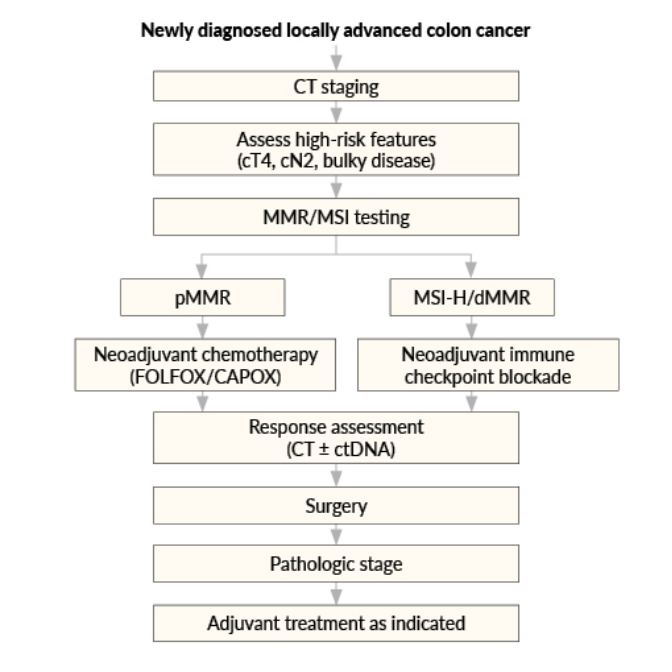
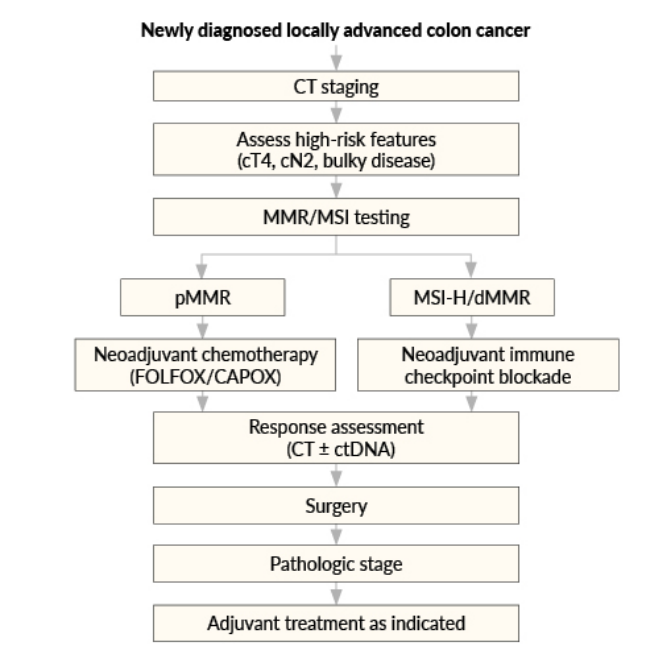
Based on the available evidence, treatment selection for patients with LACC should integrate radiologic staging and molecular characterization, particularly MMR status. A proposed evidence-based algorithm summarizing the current approach to neoadjuvant treatment selection is shown in Figure 2.
Conclusions
Neoadjuvant therapy is emerging as an important treatment strategy for selected patients with LACC. NAC has been shown to reduce the risk of residual or recurrent disease, induce measurable tumor regression and improve outcomes, with the greatest benefit observed in patients with high-risk tumor features. Across several trials, neoadjuvant treatment has also demonstrated a high degree of feasibility, with most patients completing the planned therapy without delaying surgery. However, NAC has not yet been adopted into routine clinical practice, largely due to the lack of definitive phase III evidence demonstrating survival benefit, as well as ongoing challenges related to accurate preoperative staging, tumor heterogeneity and optimal patient selection.
MMR status has emerged as a key predictive biomarker for neoadjuvant treatment selection. The therapeutic benefit of NAC is largely restricted to pMMR tumors, whereas MSI-H/dMMR cancers exhibit a minimal responsiveness to cytotoxic regimens but remarkable sensitivity to neoadjuvant immune checkpoint blockade. Multiple prospective studies have demonstrated substantial pathological response rates and durable disease control with neoadjuvant immunotherapy, which is being increasingly adopted in clinical practice due to profound pathological responses and the potential to avoid ineffective cytotoxic chemotherapy.
Beyond established PD-1- and CTLA-4-directed approaches, emerging combinations and next-generation agents are actively being investigated and may further expand the role of neoadjuvant immunotherapy.
These developments underscore the need for an individualized treatment strategy that integrates radiologic risk assessment, molecular phenotype and the potential for local complications. In this context, MMR status testing prior to surgery is essential, and treatment selection should be guided by both the molecular status and clinical evaluation. Together, these principles support a biomarker-driven treatment-selective approach to the neoadjuvant management of LACC.
Conflict of interest
The author declared that the manuscript was written in the absence of any commercial or financial relationships that could be construed as a potential conflict of interest.
Funding
The author declared that no financial support was received from any organization for the submitted work.
Author contributions
The author created and approved the final manuscript.