Introduction
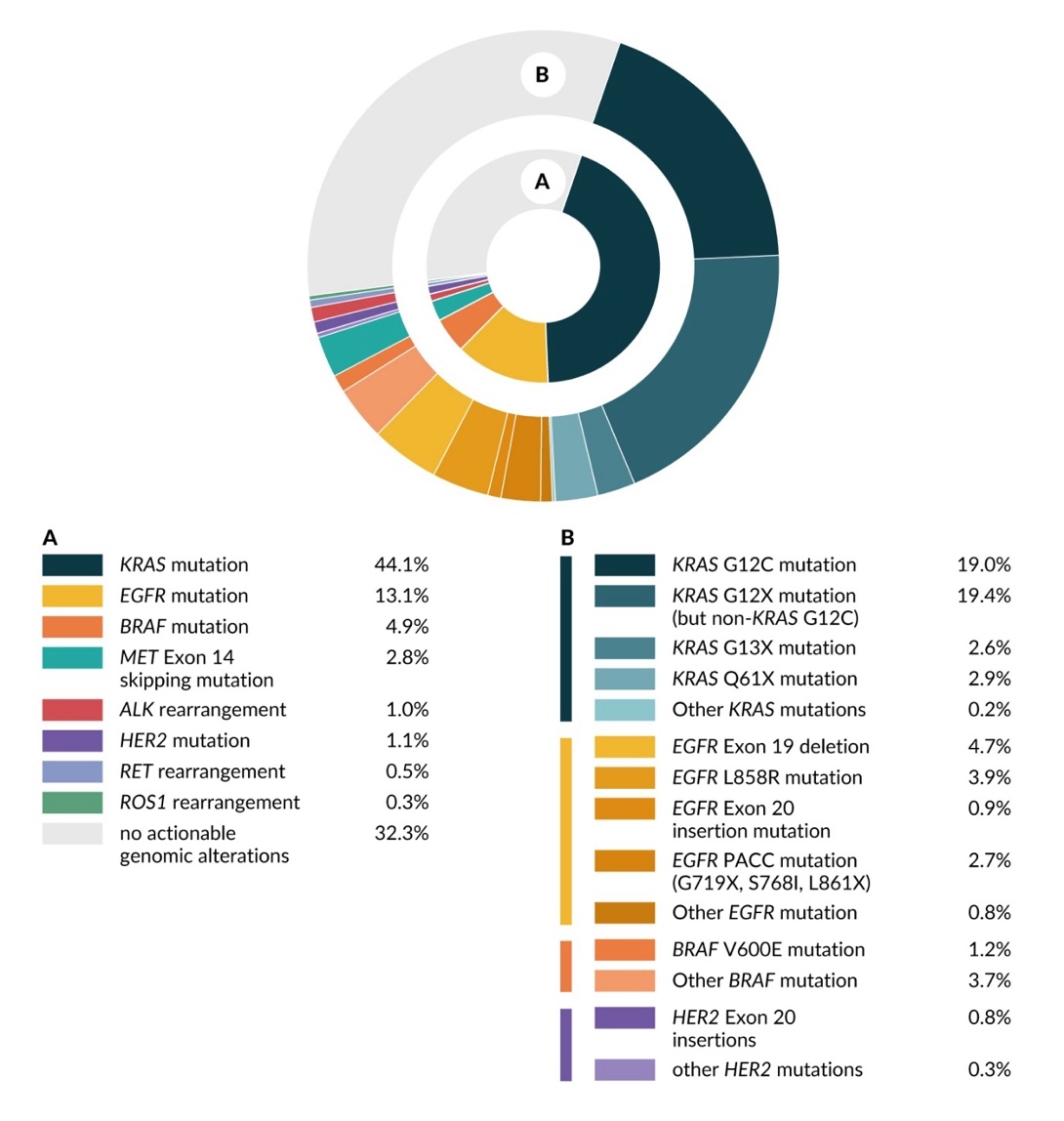
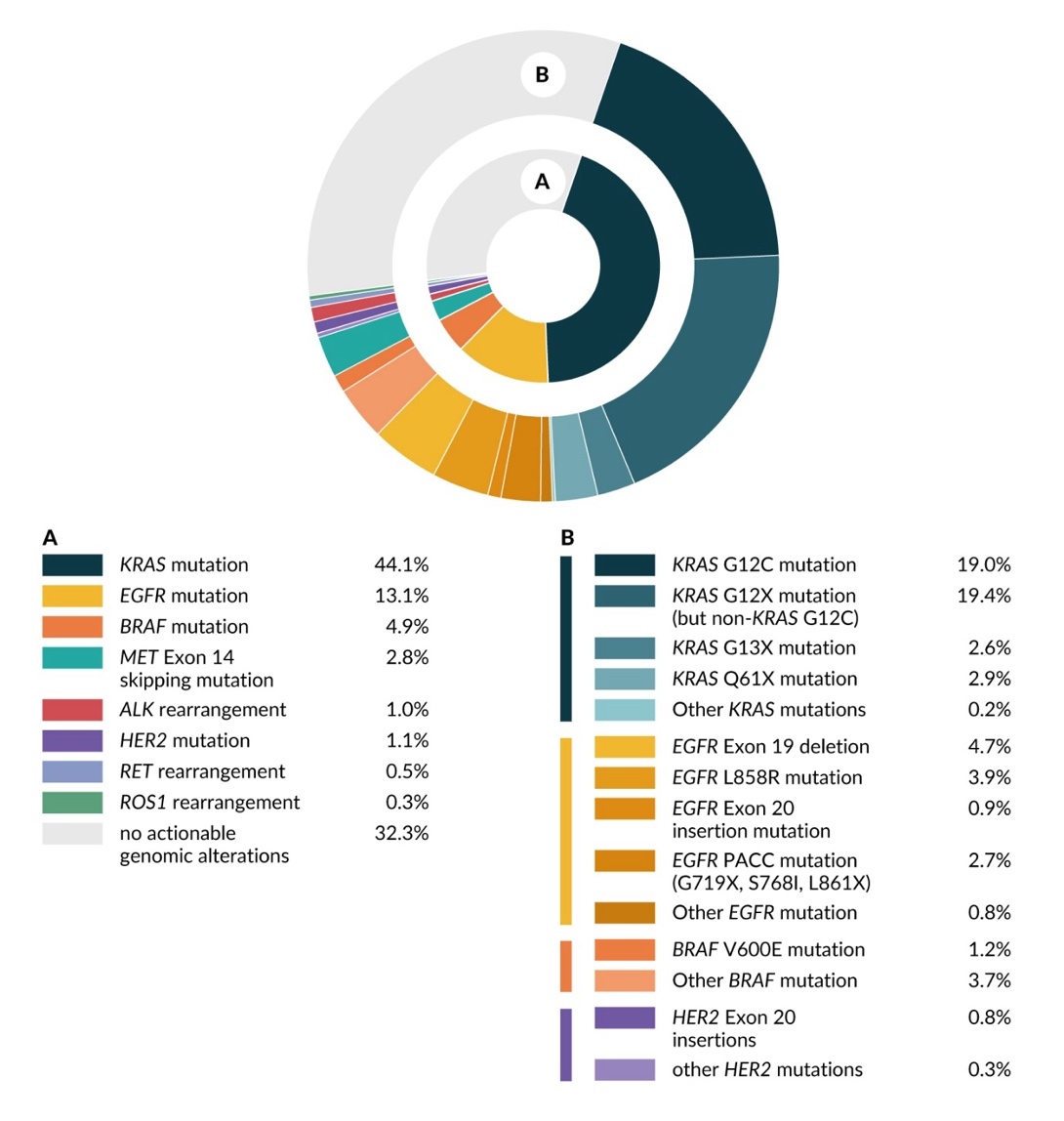
Lung cancer remains the most frequently diagnosed cancer and the leading cause of cancer death worldwide, accounting for an estimated 2.6 million new cases annually.1 Approximately one-quarter to one-third of patients present with early-stage or locally advanced (stage I–III), potentially curable disease. Actionable genomic alterations (AGA) — most commonly KRAS and EGFR mutations, followed by other oncogenic drivers — are found in a substantial proportion of these tumors, at rates broadly comparable to those observed in advanced/metastatic non-small cell lung cancer (NSCLC). Figure 1 summarizes the prevalence of AGA in early-stage lung adenocarcinoma in two large Western cohorts (Canada and Germany) of patients who underwent comprehensive next-generation sequencing (NGS)-panel testing.2,3
Overall prognosis in NSCLC has improved over the past decades, reflecting multidisciplinary care, progress in staging and diagnostics, and advances across every treatment modality — surgery, radiotherapy and systemic anticancer therapy. The systemic treatment landscape has evolved considerably with the introduction of immunotherapy and targeted therapy. The concept of biomarker-driven treatment, long established in advanced NSCLC, is now being applied to earlier disease stages. In this context, the distinction between NSCLC with and without AGA is of therapeutic relevance.
For patients with early-stage or locally advanced NSCLC without AGA, PD-1/PD-L1-based immunotherapy has shaped the SoC in both the resectable and unresectable settings. Although imperfect, PD-L1 expression (tumor proportion score, TPS), as determined by immunohistochemistry, appears to be a useful biomarker for predicting treatment response in this setting. In the resectable setting, the previously modest benefit of neoadjuvant or adjuvant platinum-based chemotherapy has been substantially enhanced by incorporating PD-1/PD-L1 inhibitors into multimodal treatment strategies. Neoadjuvant chemo-immunotherapy, either preoperatively or as part of a perioperative approach, is now considered SoC for resectable stage II–III NSCLC based on superior pathological response, event-free survival (EFS) and overall survival (OS) compared with chemotherapy alone.4–7 Adjuvant PD-1 or PD-L1 inhibition is likewise established practice in resected stage II–III NSCLC, although its benefit is less clear given inconsistent results across adjuvant immunotherapy studies.8–11 In the unresectable setting, consolidation durvalumab after chemoradiotherapy (CRT) remains SoC based on the PACIFIC trial.12,13 Most of these trials enrolled small numbers of AGA-positive patients (other than those with KRAS mutations), which limits subgroup interpretation.
Targeted agents are well established in the metastatic NSCLC setting, where they have considerably improved patient outcomes. These agents are now also changing the SoC for patients with early-stage or locally advanced AGA-positive NSCLC, based on results from pivotal studies — mainly in EGFR-positive and ALK-positive disease. Numerous ongoing studies are testing targeted agents as neoadjuvant, adjuvant or consolidative therapy across other oncogenic drivers, and their results are expected to be practice changing. This review provides an update on targeted therapy for AGA-positive early-stage and locally advanced NSCLC.
Biomarker testing in early-stage and locally advanced NSCLC
Current treatment strategies in stage IB–III NSCLC are guided by PD-L1 expression, common EGFR mutations (exon 19 deletions and L858R mutations), ALK fusions and, more recently, RET fusions.14 PD-L1 expression (TPS) may guide the selection of patients for neoadjuvant or perioperative chemo-immunotherapy. In parallel, testing for common EGFR mutations and ALK fusions is required to identify patients eligible for adjuvant therapy with osimertinib and alectinib, respectively. Testing for RET fusions is also relevant, as adjuvant selpercatinib is now guideline-recommended based on the results of LIBRETTO-432, although regulatory approval for the adjuvant indication remains pending as of September 2026.
Results of EGFR and ALK testing should be available before initiation of neoadjuvant chemo-immunotherapy, as patients with EGFR-mutant or ALK-rearranged NSCLC are not candidates for immune checkpoint inhibitors because of limited efficacy and increased toxicity in these molecular subgroups.
Extrapolating from the metastatic setting, tumors harboring RET or ROS1 fusions appear to derive limited benefit from immune checkpoint inhibitors, whereas NSCLC with selected MET alterations may derive variable benefit.15–17 However, for these gene alterations, the available evidence in the setting of early-stage disease remains limited and conflicting.
Treatment strategies for stage IB–III NSCLC mandate testing for EGFR, ALK and RET, but broader molecular profiling with reflex NGS is encouraged.18,19 Predictive testing is SoC for non-squamous NSCLC; however, AGA are identified in approximately 10% of squamous cell lung carcinomas and are enriched in never-smokers and younger patients.20 Consequently, clinical practice guidelines increasingly support reflex predictive biomarker testing irrespective of the histological subtype (National Comprehensive Cancer Network [NCCN], German S3 guidelines).
NGS may have a longer turnaround time than focused multiplexed or single-gene assays, but it offers important advantages in terms of future clinical utility. A substantial proportion of patients with early-stage NSCLC still eventually develop metastatic disease, and the availability of a broad molecular profile may facilitate rapid treatment initiation at relapse.21 Furthermore, synchronous or metachronous secondary lung cancers are not uncommon in NSCLC patients, and comparison with a well-characterized molecular profile of the index tumor can help distinguish an independent second primary tumor from metastatic disease.22 Performing broad NGS upfront therefore maximizes the availability of molecular information throughout the disease course.
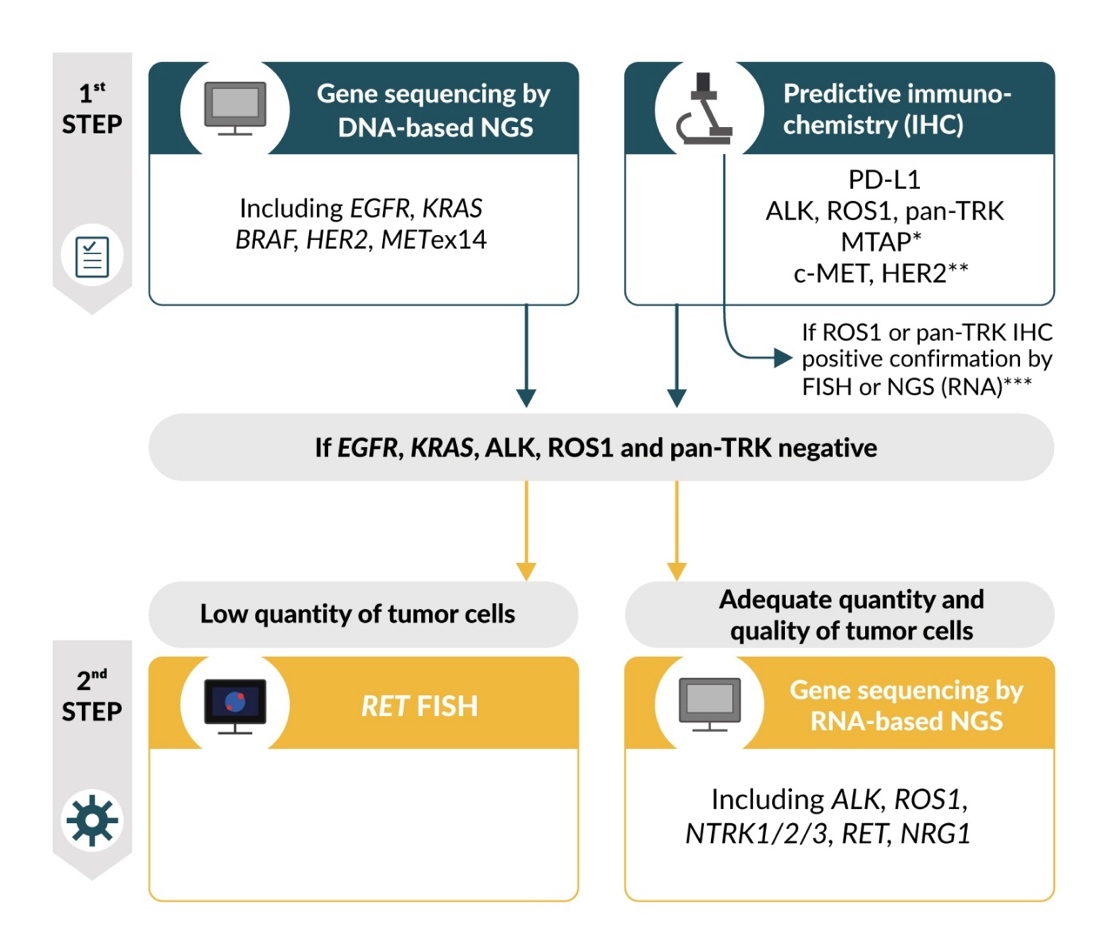
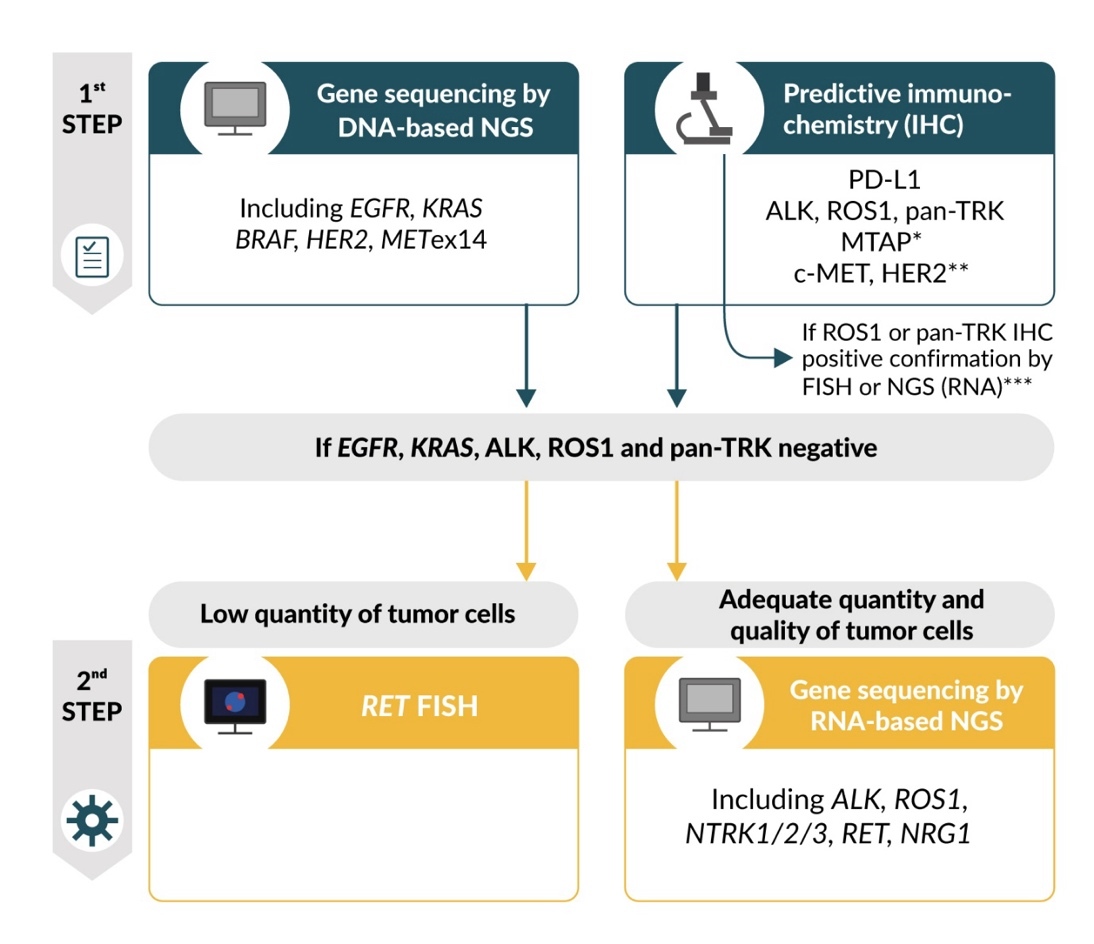
Predictive biomarker testing algorithms may vary across geographic regions according to local drug approvals, availability of testing platforms and reimbursement.23 With the rapidly evolving field of biomarker-driven treatment strategies, close communication between oncology and pathology is essential to ensure that local predictive biomarker testing algorithms remain aligned with current therapeutic options and local requirements. At our hospital, reflex predictive biomarker testing is guided by an algorithm combining predictive immunohistochemistry with NGS-based molecular profiling, adapted to the NSCLC subtype and tumor specimen adequacy (Figure 2).
As outlined in this review, the clinical role of broad biomarker testing in early-stage NSCLC will likely expand as several targeted agents are being evaluated in perioperative clinical trials and it is anticipated that the spectrum of treatment-relevant genomic alterations will extend beyond EGFR, ALK and RET in the future. Predictive and prognostic significance of co-alterations such as, for example, STK11 and KEAP1 in KRAS-mutated NSCLC requires further investigation.24,25 Finally, biomarker-guided treatment adaptation using circulating tumor DNA (ctDNA) for minimal residual disease for risk-adapted treatment escalation or de-escalation represents an area of ongoing research.26
Targeted therapy for EGFR-mutated NSCLC
Targeted therapy for EGFR-mutated NSCLC has been evaluated in the resectable setting – in both the adjuvant and neoadjuvant settings – and as consolidation after CRT in unresectable disease. Most trials have enrolled patients with common EGFR mutations (exon 19 deletion/L858R mutation). Robust data for EGFR exon 20 insertions and other uncommon mutations, including P-loop and alpha C-helix compressing (PACC) mutations, are still lacking, although clinical trials are ongoing.
Resectable stage: Adjuvant therapy
Several first-generation EGFR tyrosine kinase inhibitors (EGFR-TKIs) were compared with chemotherapy or placebo in the adjuvant setting: erlotinib (RADIANT,27 EVAN28,29), gefitinib (IMPACT,30 ADJUVANT/CTONG110431,32) and icotinib (EVIDENCE,33 CORIN34). Across these trials, a consistent pattern emerged: disease-free survival (DFS) curves separated early in favor of the TKI but converged again with the comparator (chemotherapy or placebo) arm after treatment discontinuation (typically after 1–2 years), and this DFS benefit did not translate into an OS benefit — raising the question of whether early-generation EGFR-TKIs can produce durable improvements in OS or only delay disease recurrence (Table 1).
This changed with third-generation EGFR-TKIs, which offer improved central nervous system (CNS) penetration and T790M coverage. ADAURA (osimertinib) and ARTS (aumolertinib) — both placebo-controlled phase III trials in completely resected EGFR-mutated (exon 19del/L858R) NSCLC, using a longer 3-year TKI duration — showed a highly significant DFS benefit (HR: 0.17 in both trials at first analysis).35,36 In ADAURA, the DFS benefit was sustained on longer follow-up (HR: 0.27; stage IB–IIIA) with a pronounced CNS-DFS benefit (HR: 0.24 at three years), and, importantly, translated into an OS benefit (5-year OS, 85% vs 73% in stage II–IIIA; HR: 0.49; p<0.001), which was a secondary endpoint.35 The OS benefit appears independent of adjuvant chemotherapy use (5-year OS benefit similar with and without prior chemotherapy), although the study was not powered to assess this question. A recent exploratory eight-year OS landmark update of ADAURA showed a continued OS benefit for adjuvant osimertinib versus placebo both in the stage II–IIIA (HR: 0.53 [95% CI: 0.38–0.75]) and the overall population (HR: 0.52 [95% CI: 0.39–0.71]), while numerically favoring osimertinib in stage IB (HR: 0.50 [95% CI: 0.23–1.01]).37 Given the long-term DFS and OS benefit, adjuvant osimertinib is now regarded as SoC for resected stage IB or higher EGFR-mutated NSCLC.
ARTS, conducted in China with a similar design, permitted crossover from placebo to aumolertinib and mandated adjuvant chemotherapy for stage IIB–IIIB disease (received by 95% of patients).36 Aumolertinib significantly prolonged DFS compared with placebo (median DFS, not reached vs 19.4 months; HR: 0.17). CNS-recurrence was also less frequent in the aumolertinib arm (6% vs 16%). OS data are immature.
Ongoing trials are extending adjuvant EGFR-targeting strategies to earlier stages (ADAURA-238) and exploring combinations with chemotherapy (APEX39) (Table 2).
Resectable stage: Neoadjuvant strategies
Neoadjuvant osimertinib monotherapy achieves high radiological response rates, e.g., an objective response rate (ORR) of 71% in the NEOS study,40 but pathological responses have been disappointing across different phase II studies, with pathologic complete response (pCR) rates of 3.6% (NEOS) and 0% as in the NORA study41 and the study by Blakely CM, et al.42
Building on the results from the ADAURA trial, the three-arm phase III NeoADAURA trial investigated the efficacy of neoadjuvant osimertinib with or without platinum-based chemotherapy compared with platinum-based chemotherapy. Pathology results after induction were disappointing: osimertinib with or without chemotherapy resulted in major pathological response (MPR) rates of 26% and 25% and pCR rates of 4% and 9%, respectively.43 The chemotherapy-only arm in NeoADAURA also yielded very modest results (MPR of 2%, pCR of 0%). Long-term results (EFS/OS) for these trials are awaited. While high response rates to neoadjuvant EGFR inhibition are of importance for surgical considerations regarding resectability, the reported pCR and MPR rates indicate (again) limited efficacy of EGFR-TKIs to induce eradication of disease.
Interestingly, the recently presented phase II NEOVADE trial explored a more intensive sequential strategy in Chinese patients with common, rare or exon 20 insertion EGFR mutations — six weeks of neoadjuvant almonertinib, a two-week washout, then three cycles of platinum-doublet chemotherapy combined with the PD-L1 inhibitor adebrelimab before surgery — achieving numerically higher MPR (41%) and pCR (16%) rates among 32 evaluable patients, with an R0 resection rate of 91%, although at the expense of higher toxicity (adverse events of grade ≥3 occurring in 88% of patients).44
The ongoing phase II AmiNA trial is testing a dual-targeting neoadjuvant approach in 68 patients with resectable stage II–IIIB (N2), EGFR-mutated (exon 19del/L858R) NSCLC, randomized between the bispecific EGFR/MET antibody amivantamab plus the third- generation EGFR-TKI lazertinib (Cohort 1) and amivantamab plus carboplatin and pemetrexed (Cohort 2), with MPR as the primary endpoint.45
Strategies to enhance the efficacy of EGFR-directed therapy are needed, and the neoadjuvant setting offers an attractive platform for testing the in vivo activity of new combinations, especially if they have been shown to be effective in the metastatic setting.
Unresectable stage
In the PACIFIC trial, only 35 of 713 randomized patients had EGFR-mutated tumors. In this small subgroup, consolidation durvalumab showed no progression-free survival (PFS) or OS benefit over placebo, consistent with real-world data suggesting a lack of benefit and a high rate of immune-related adverse events with consolidation immunotherapy in this population.46,47
LAURA subsequently established consolidation osimertinib as the new SoC for unresectable stage III EGFR-mutated NSCLC after concurrent or sequential CRT, with a substantial PFS benefit (median 39.1 vs 5.6 months; HR: 0.16).48 Importantly, patients with osimertinib were less likely than those with placebo to develop new brain (8% vs 29%) and lung metastases (6% vs 29%) compared with placebo. An early OS trend was recently reported in favor of osimertinib (median OS, 58.8 vs 54.0 months, HR 0.67 [95% CI: 0.40–1.14]), despite 76% of placebo-arm patients crossing over to osimertinib at progression.49 The final analysis is awaited. Osimertinib was associated with more high-grade toxicity and a higher rate of radiation pneumonitis.50 Furthermore, the optimal treatment duration remains undefined in LAURA, warranting careful patient discussion. The markedly poor placebo-arm outcomes in LAURA raise the question of whether locally advanced unresectable EGFR-mutated NSCLC should be regarded as an upfront systemic disease.
The ongoing NEOLA trial is testing a “sandwich” approach of induction osimertinib before CRT, followed by maintenance osimertinib.51
Other EGFR mutations
Several clinical trials are ongoing, or have been completed but not yet reported, for patients with uncommon EGFR mutations, including exon 20 insertions and EGFR PACC mutations. These include adjuvant trials with osimertinib (TARGET,52 ADMIN53), zipalertinib plus chemotherapy (REZILIENT454), sunvozertinib (WU-KONG1655) and firmonertinib (FIRMOST56), each evaluating DFS as the primary endpoint in resected stage IB–IIIB disease. Together, these trials should clarify whether adjuvant TKI therapy benefits the full spectrum of EGFR alterations beyond the common Ex19del/L858R population.
Targeted therapy for ALK-positive NSCLC
Resectable stage: Adjuvant therapy
The first-generation ALK-TKI crizotinib failed to demonstrate benefit in the adjuvant setting. The ALCHEMIST trial (E4512) enrolled 166 patients with resected stage IIA–IIIB, centrally confirmed ALK-positive NSCLC, randomized to crizotinib (250 mg twice daily for up to two years) or observation; enrollment was stopped early after the U.S. Food and Drug Administration (FDA) approval of adjuvant alectinib. At a median follow-up of 65.7 months, there was no DFS benefit (median DFS of 74.6 months with crizotinib vs 75.1 months with observation; HR: 1.08) and no OS benefit, while grade ≥3 adverse events of any attribution occurred in 58% of patients, 22% required dose reductions and 29% discontinued treatment due to adverse events.57 Importantly, adjuvant chemotherapy was received by most patients in both arms (87% in the crizotinib arm and 95% in the observation arm).
In contrast, second-generation ALK-TKIs have transformed practice. ALINA randomized 257 patients with completely resected, ALK-positive stage IB (≥4 cm) to IIIA (American Joint Committee on Cancer/Union for International Cancer Control [AJCC/UICC] 7th edition) NSCLC to alectinib (600 mg twice daily for 24 months) or four cycles of platinum-based chemotherapy.58 Compared with chemotherapy, two years of adjuvant alectinib significantly improved DFS in the stage II–IIIA primary analysis population (n=231), reducing the risk of recurrence or death by 76% (HR: 0.24 [95% CI: 0.13–0.43]). Median DFS was not reached with alectinib compared with 41.3 months with chemotherapy, accompanied by a meaningful CNS-DFS benefit (HR: 0.22; brain as site of distant recurrence in 4 vs 14 patients). Grade 3–4 adverse events were similar between arms (30% vs 31%). Recently updated results from ALINA showed a sustained DFS benefit with alectinib versus chemotherapy in both the stage II–IIIA (HR: 0.36) and intention-to-treat (ITT; HR: 0.35) populations.59 These results led to regulatory approval and established adjuvant alectinib as SoC, although OS data remain immature.
The phase III ELEVATE study, conducted in China, included patients with completely resected stage IB–IIIB ALK-positive NSCLC and randomized 274 patients to ensartinib (225 mg once daily for two years) or placebo.60 Adjuvant chemotherapy was permitted and was received by approximately 70% of patients. Compared with placebo, adjuvant ensartinib significantly improved DFS (HR: 0.20 [95% CI: 0.11–0.38]; p<0.0001) in patients with stage II–IIIB disease, with 2-year DFS rates of 86.4% versus 53.5%, respectively, at the cost of more grade ≥3 treatment-related adverse events (27.0% vs 6.6%). OS data remain immature.
In summary, adjuvant alectinib and adjuvant ensartinib are now considered SoC for resected ALK-positive NSCLC.
Resectable stage: Neoadjuvant and perioperative strategies
Phase II trials of neoadjuvant alectinib show encouraging pathological responses with manageable safety and no delays to surgery. In ALNEO, 33 patients with potentially resectable stage III ALK-positive NSCLC received two cycles (eight weeks) of neoadjuvant alectinib followed by surgery and 24 cycles of adjuvant alectinib. The pre-surgical objective response rate was 67%, with MPR in 42% and pCR in 12% of patients, and grade ≥3 adverse events in fewer than 10% of patients during either phase.61
In the alectinib cohort of the NAUTIKA1 platform trial, eight weeks of neoadjuvant alectinib (600 mg twice daily) in resectable stage IB–IIIA/selected IIIB disease produced an ORR of 60% (27 of 45 eligible patients), MPR of 56% (24 of 43 treated patients) and pCR of 19%.62 The R0 resection rate was 95% and the 2-year DFS rate was 97% at a median follow-up of 23 months.
The recently presented LORIN trial pushed this concept further to a perioperative strategy, testing neoadjuvant lorlatinib — a more potent third-generation ALK-TKI with strong CNS activity — for three 4-week cycles in patients with potentially resectable or unresectable stage III disease, followed by surgery or CRT and two years of consolidation lorlatinib.63 Of 24 patients considered unresectable at baseline, 75% (18/24) achieved conversion to surgery after induction lorlatinib, and among all 32 resected, evaluable patients, MPR was 81% and pCR 47%.
In summary, these data indicate that a neoadjuvant strategy with ALK-TKIs is feasible, and, with more potent agents such as lorlatinib, may downstage borderline-resectable disease to enable surgery — though none of these single-arm phase II trials has yet defined a SoC and randomized confirmation with survival endpoints is needed.
Unresectable stage
Direct prospective evidence for consolidation therapy after CRT in unresectable, ALK-positive stage III NSCLC is currently lacking. Retrospective data in 67 patients with unresectable stage IIIA–C ALK-positive NSCLC treated with concurrent platinum-based CRT suggest that consolidation ALK-TKI (predominantly alectinib) outperforms both consolidation durvalumab and observation (median PFS, not reached vs 11.3 vs 7.2 months; median OS, not reached vs not reached vs 70.6 months), and that essentially all patients who received no consolidation therapy eventually progressed.64 These hypothesis-generating findings mirror the LAURA experience in EGFR-mutated disease.
Results from the HORIZON-01 platform trial,65 which randomized patients with unresectable stage III NSCLC harboring ALK, ROS1 or RET alterations after CRT to three years of the corresponding TKI (alectinib, entrectinib or pralsetinib, respectively) versus one year of consolidation durvalumab, have not yet been reported.
Targeted therapy for other oncogenic alterations
Beyond EGFR and ALK, the biomarker-driven paradigm is extending to other oncogenic drivers in early-stage NSCLC, investigated in platform trials such as NAUTIKA1, an umbrella phase II study evaluating neoadjuvant and adjuvant targeted therapy across different molecular alterations in resectable stage IB–IIIA (and selected IIIB) NSCLC,66 including ALK, ROS1, NTRK1/2/3 and KRAS G12C variants. Such platform study designs are important for low-prevalence alterations, for which recruitment to single-arm or randomized phase III trials would otherwise be difficult.
KRAS G12C mutation
As the single most common oncogenic driver in early-stage NSCLC in non-Asian populations, KRAS G12C mutations are an important target. Overall, the clinical trial landscape for KRAS-mutated NSCLC is evolving rapidly and has recently yielded some promising results in the advanced setting. Various trials are investigating KRAS(OFF) G12C-selective inhibitors and KRAS(ON) G12C-selective inhibitors as monotherapy or in combination with other agents in advanced NSCLC. Furthermore, treatment options are expanding beyond KRAS G12C-mutated NSCLC, including KRAS G12D-targeting therapies and pan-KRAS inhibitors. Currently, different KRAS G12C inhibitors are being investigated in patients with resectable or unresectable NSCLC, including the KRAS(OFF) G12C-selective inhibitors divarasib, olmorasib and calderasib.
Preliminary data from the KRAS G12C sub-cohort of the NAUTIKA1 study, using six weeks of neoadjuvant divarasib in patients with resectable stage IB–IIIA/selected IIIB disease, showed a manageable safety profile (predominantly low-grade gastrointestinal toxicity, no treatment discontinuations) and promising activity in the 19 patients who underwent surgery (MPR in 42% and pCR in 16%).
Ongoing or planned studies for patients with resectable early-stage KRAS G12C-mutated NSCLC include the phase III KRASCENDO 3,67 KANDLELIT-01368 and SUNRAY-0269 trials. The ongoing phase III SUNRAY-02 trial is testing adjuvant olmorasib, an oral, brain-penetrant, next-generation KRAS G12C inhibitor, added to standard immunotherapy. In part A of the trial, patients with stage II–IIIB resected NSCLC with residual tumor after presurgical chemo-immunotherapy, or treated with upfront resection and adjuvant chemotherapy, are randomized to 3 years of olmorasib plus 12 months of intravenous pembrolizumab versus placebo plus pembrolizumab. The ongoing KANDLELIT-013 trial is investigating adjuvant calderasib, a next-generation, selective KRAS G12C-GDP covalent inhibitor, in a similar setting; patients are randomized to calderasib (treatment duration not disclosed) plus 1 year of subcutaneous pembrolizumab or placebo plus pembrolizumab.
The planned phase III KRASCENDO 3 trial will investigate adjuvant divarasib, a highly potent covalent KRAS G12C inhibitor, given for two years, compared with adjuvant immunotherapy (pembrolizumab or nivolumab) or observation, in patients with resected stage II–IIIB KRAS G12C-mutant NSCLC who did not achieve a pCR following neoadjuvant chemo-immunotherapy. The primary endpoint in all these adjuvant trials is DFS.
For locally advanced unresectable KRAS G12C-mutated NSCLC, part B of the phase III SUNRAY-02 trial is investigating olmorasib (three years) plus durvalumab (one year) versus placebo plus durvalumab in stage III patients without progression on concurrent platinum-based chemoradiotherapy (cCRT).
In parallel, the ongoing KANDLELIT-01570 trial evaluates calderasib (treatment duration not disclosed) plus durvalumab compared with placebo plus durvalumab in patients with locally advanced, unresectable KRAS G12C-mutant NSCLC without progression after cCRT.
RET fusion
Recently, the first results of LIBRETTO-432, a global, multicenter, randomized, double-blind phase III trial investigating selpercatinib (a highly selective, potent and CNS-penetrant RET inhibitor) for up to three years compared with placebo as adjuvant therapy after definitive local therapy (surgery or radiotherapy, with adjuvant chemotherapy if indicated) in 151 patients with resected stage IB–IIIA RET fusion-positive NSCLC, have been presented.71 In the primary analysis population of stage II–IIIA patients, the 2-year event-free survival was 92% with selpercatinib versus 61% with placebo (HR: 0.17). Almost all of these patients (>90%) had a diagnosis of adenocarcinoma, had undergone definitive surgery and had received adjuvant systemic chemotherapy prior to randomization. OS data remain immature. The most common adverse events of grade 3 or higher were increased levels of alanine aminotransferase and aspartate aminotransferase. Dose reductions due to adverse events occurred in 55% of patients receiving selpercatinib. This represents the first phase III dataset for a driver alteration beyond EGFR and ALK in the adjuvant setting and is likely to establish adjuvant selpercatinib for a duration of three years as a new SoC for RET fusion-positive early-stage NSCLC pending regulatory review.
Results from neoadjuvant selpercatinib assessed within the multicohort LIBRETTO-001 trial (cohort 7) have not yet been presented.72
HER2 mutation
The phase III Beamion LUNG-3 trial73 is evaluating three years of adjuvant zongertinib, a HER2-selective TKI that spares wild-type EGFR, against standard-of-care adjuvant immunotherapy in patients with completely resected, HER2 tyrosine-kinase-domain-mutated, stage II–IIIB NSCLC following 3–4 cycles of neoadjuvant chemo-immunotherapy or adjuvant chemotherapy.
ROS1 fusion
TRUST-IV74 is an ongoing, globally recruiting phase III trial for patients with resected, stage IB–IIIA, ROS1 fusion-positive NSCLC, investigating adjuvant taletrectinib, a next-generation ROS1-TKI with demonstrated CNS activity, against placebo.
Discussion and conclusions
Targeted therapy has transformed the management of EGFR-mutated, ALK-positive and RET-positive early-stage NSCLC, establishing new standards of care in both the post-surgical (adjuvant osimertinib, alectinib, ensartinib and selpercatinib) and unresectable (consolidation osimertinib) settings, although regulatory approval is still pending for some indications (Table 3). Studies using neoadjuvant targeted therapy have shown that this approach is feasible in the operable setting of AGA-positive NSCLC, particularly regarding tolerability, radiological response and the feasibility of surgery. However, TKI monotherapy yielded disappointingly low pathological responses (pCR, MPR), and strategies to improve efficacy are needed in this context. Treatment of early-stage and locally advanced EGFR-mutated disease remains particularly challenging.
Numerous trials are now ongoing across other oncogenic drivers, with results in KRAS G12C-mutated NSCLC especially eagerly awaited given the scale of the current trial program. Many questions remain open, including the optimal timing of targeted therapy (pre-, peri- or postoperatively in resectable patients, or as pre-CRT, peri-CRT or consolidative treatment in unresectable disease), the optimal duration of treatment, the benefit of targeted therapy in very early stages of NSCLC, and potential synergies with established treatments and novel agents. Substantial changes are expected in this rapidly evolving field over the coming years.
Conflict of interest
Núria Aeschlimann reported receiving a personal grant from the Swiss Cancer League (KLS-6150-08-2024 BIL). Judith Hafer declared that the manuscript was written in the absence of any commercial or financial relationships that could be construed as a potential conflict of interest. Spasenija Savic Prince reported receiving grants and consulting fees from Merck Sharp and Dohme and AstraZeneca; honoraria from AbbVie AG. David König reports receiving a personal grant from Geistlich-Stucki-Stiftung; consulting fees from AstraZeneca, Merck, Merck Sharp and Dohme, Novartis and PharmaMar; honoraria from AstraZeneca, Amgen, Bristol-Myers Squibb, Mirati, Roche and Sanofi; travel support from Amgen, Roche and Sanofi; and advisory board fees from AstraZeneca, Bristol-Myers Squibb, Iaculis, Johnson & Johnson, Merck, Merck Sharp and Dohme and Roche; all received support was not related to this article. These entities did not play a role in the development of the manuscript and did not influence its content in any way.
Funding
The authors declared that no financial support was received from any organization for the submitted work.
Author contributions
All authors contributed to and approved the final manuscript.
AI use
Artificial intelligence (AI)-assisted tools were used exclusively for final language editing to improve grammar and readability. These tools were not used to generate scientific ideas or content, analyze data, interpret findings, or formulate conclusions.